
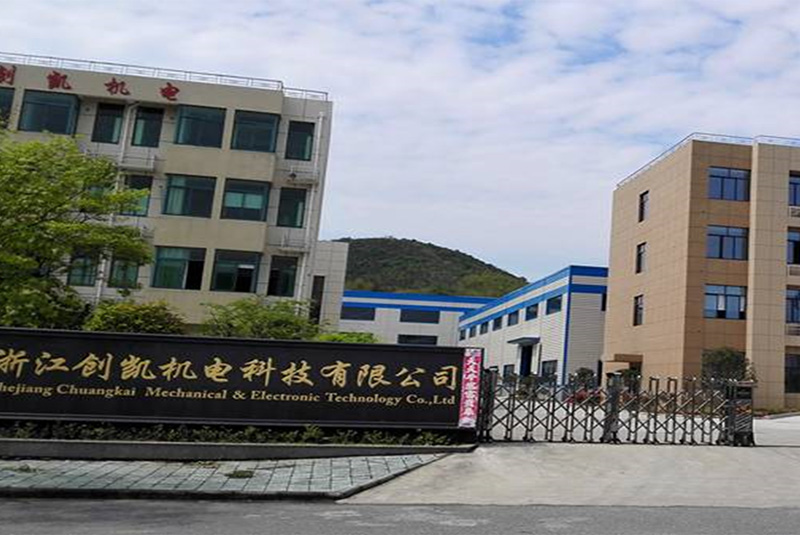
CHUANGKAI

a i l a n d

Loading


Metal sheet product samples

Metal sheet product samples
CONTACT US
Vector

FAQ

faq

Precision stamping components are manufactured using high-precision molds through single-station clamping and positioning in the punching process. Given the stringent dimensional accuracy and positional tolerance requirements for workpieces on stamping machines, rigorous finishing processes including mold sharpening, heat treatment, surface treatment, and assembly are essential. Since these components are typically produced in small batches or as discrete parts, the production volume is relatively low, which consequently imposes less stringent requirements on machinery. During stamping, materials flow into the die cavity through gaps in the mold. Under pressure, the material undergoes separation or plastic deformation to achieve the desired shape and structure. After pressure release, controlled forming processes yield finished products. This makes stamping a classic cold drawing technique. In actual production, to ensure product quality, enhance efficiency, reduce waste, and conserve energy, manufacturers typically implement strategic measures: 1. Use tools appropriately. 2. Reasonable choice of raw materials. 3. Formulate reasonable process regulations. 4. Improve the technical training of operators. 5. Improve the automation of machines. 6. Improve working conditions. Stamping parts manufacturing characteristics: (1) High utilization rate of materials. (2) Complex products can be made from relatively thin sheets. (3) Can be made into various structures containing structural columns. (4) Can form thick wall hollow. (5) Can be made into large area of board material. (6) Easy to mechanize. (7) Facilitate the completion of mechanization and automation. (8) Easy to complete the system.

Precision mechanical parts manufacturing typically involves processing components for precision machinery, which requires achieving extremely high accuracy. Therefore, in addition to understanding the specific material requirements and common techniques for machining precision mechanical parts, it's essential to know the complete production process. Below, we'll outline the five stages of precision mechanical parts manufacturing. 1. Rough machining The key consideration is to improve productivity. Most of the machining capacity on each surface is removed, and the machining produces a reference plane. 2. Semi-finishing It usually removes the defects that may be produced after rough machining, and carries out the machining of primary and secondary surfaces at the same time. It is necessary to achieve a fixed machining accuracy to facilitate the preparation for the finishing stage and ensure a moderate finishing capacity. 3. Finishing In the finishing stage, large cutting amount, small feed amount and cutting depth are usually used to remove the machining capacity left by semi-finishing, so that the surface of precision mechanical parts can reach the technical standard of drawings. 4. Polishing It is mainly used to reduce surface roughness or strengthen the processed surface, and is mainly used for surface processing with high surface roughness requirements. 5. Ultra-precision machining Generally, the machining accuracy of the workpiece is 0.1-0.01μm and the surface roughness value ra is less than or equal to 0.001μm by means of precision drilling, precision mirror cutting, precision grinding and polishing. The five-stage precision machining process for mechanical components progresses from rough to refined, with gradual enhancement of accuracy. Through this systematic approach, the components achieve the required specifications as per customer needs. Yuntuo Machining specializes in precision mechanical parts manufacturing. We provide customized services based on client-provided drawings and materials, delivering precision-engineered components that meet all client expectations.

send us free
message


recent
blog articles

Advantages of precision stamping

30
June

Precision stamping components offer the following advantages: (1) Easy control and high production efficiency. These components are typically manufactured using stamping tooling and specialized equipment, making automated production straightforward. (2) The use of molds during manufacturing ensures dimensional consistency across products. (3) Modern precision metal stamping technology can produce diverse components, even those with complex designs, demonstrating broad applicability across industries.(4) Precision metal stamping parts generally produce minimal scrap during production, enabling efficient material utilization and resulting in relatively low manufacturing costs.
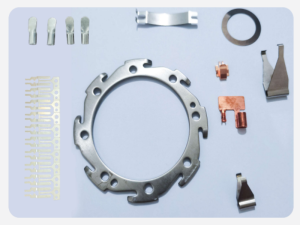
Metal-stamping-products10

The manufacturing process involves operations such as blanking, bending, deep drawing, forming, and casting-rolling. The raw materials typically consist of hot-rolled or cold-rolled metal sheets (primarily cold-rolled), including carbon steel plates, alloy steel plates, spring steel plates, galvanized sheets, tin-plated sheets, stainless steel sheets, copper and copper alloy sheets, aluminum and aluminum alloy sheets. The hardness testing of stamping materials primarily evaluates whether the purchased metal sheets’ quenching levels are suitable for subsequent stamping processes. Different types of stamping operations require the use of steel plates with corresponding strength grades.

stamping-equipment2

Precision stamping components are manufactured using high-precision toolings through single-station clamping and positioning in the punching process. Given the stringent dimensional accuracy and positional tolerance requirements for workpieces on stamping machines, rigorous finishing processes including die sharpening, heat treatment, surface treatment, and assembly are essential. As these parts are typically produced in small batches or as discrete components, the machinery requirements are relatively modest. During stamping, material flows into the die cavity through gaps in the tooling or mold, where pressure-induced separation or plastic deformation forms the desired shape and structure. After pressure release and controlled process management, the finished product is obtained. This demonstrates that stamping technology represents a classic example of cold forming techniques.
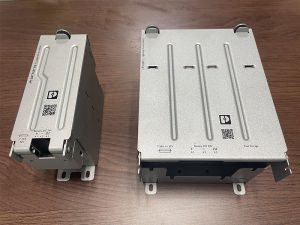
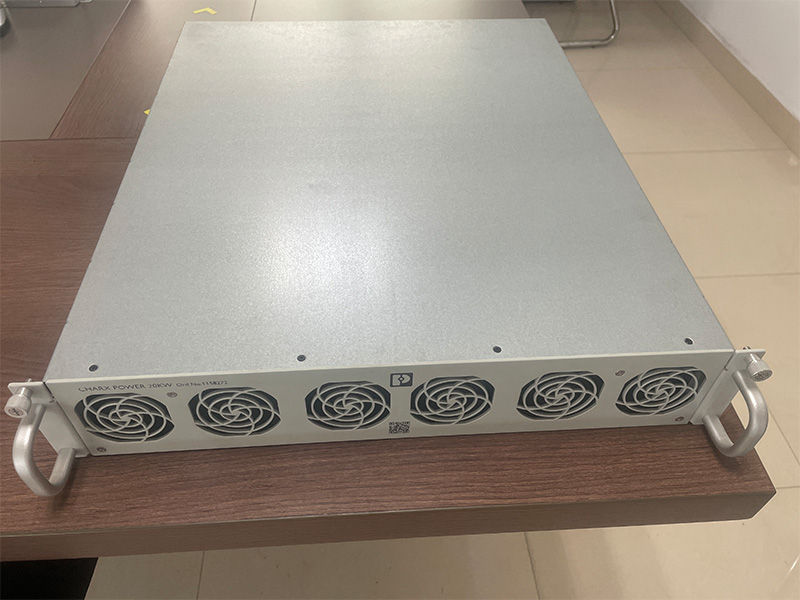
Metal stamping products UPS power box

In the production process, to ensure product quality and efficiency while reducing waste and conserving energy, the following practical measures should be implemented: 1. Proper tool selection. 2. Rational choice of raw materials. 3. Establishment of standardized production protocols. 4. Continuous technical training for operators. 5. Enhancement of machine automation. 6. Optimization of working conditions.

The manufacturing characteristics of stamped parts:(1) the utilization rate of materials is high.(2) it can be used to make complex products from relatively thin sheets.(3) it can be made into various structures containing structural columns.

Metal-stamping-products6


Investigation on the causes and improvement of deformation in precision machining

30
June

The precision mechanical processing performance is not only vital to corporate interests but also safety-critical. While generating economic benefits, it significantly reduces workplace accident risks. Therefore, preventing component deformation during manufacturing is paramount. Operators must consider all relevant factors and implement preventive measures to ensure product integrity. To achieve this, analyzing deformation causes in machining processes and developing reliable countermeasures are essential. These efforts will establish a solid foundation for realizing modern enterprise development strategies.

  1. Analysis of the causes of deformation in precision machining
  2. The internal force causes the change of machining accuracy of parts

In lathe machining, the cohesive force principle is typically applied. By using the lathe’s three-jaw or four-jaw chuck to securely hold workpieces, precision mechanical processing can be performed. To ensure parts remain clamped under force and minimize internal axial stress, the clamping force must exceed the mechanical cutting force. The clamping force increases proportionally with the cutting force and decreases accordingly. This operational approach ensures stable force distribution during machining. However, when the three-jaw or four-jaw chuck is released, the machined parts often deviate significantly from the original design—some exhibit polygonal shapes, others become oval, resulting in substantial dimensional deviations.

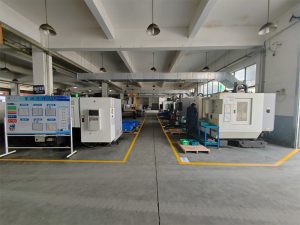
Machine processing equipment - Vertical machining center

  1. It is easy to produce deformation after heat treatment

Sheet metal components, characterized by their large aspect ratio, are prone to developing “hat-shaped bending” after heat treatment. This deformation manifests in two primary ways: first, midsection bulging that amplifies surface flatness deviations; second, bending induced by external environmental factors. These deformation issues arise not only from altered internal stresses post-heat treatment but also stem from operators’ insufficient expertise in component structural stability, which significantly increases deformation risks.

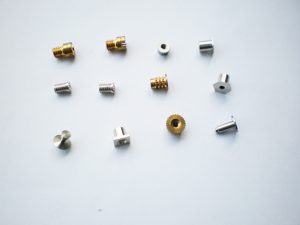
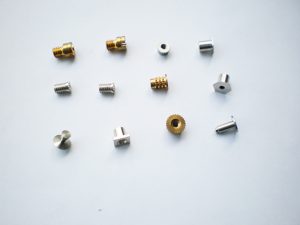
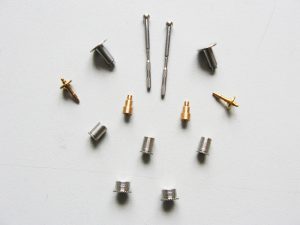
Machine processing products - Various non-standard riveted parts 2CNC Machining-Medical Products-Petri Dishes

  1. Elastic deformation caused by external force

There are four primary causes of elastic deformation in mechanical processing. First, components containing internal thin plates require more precise machining techniques. When workers fail to align these components with design drawings during positioning and clamping, elastic deformation often occurs. Second, uneven surfaces on lathes and fixtures create uneven stress distribution during clamping, causing the weaker side to deform under force during cutting. Third, improper positioning during machining reduces component stiffness. Fourth, cutting forces themselves contribute to elastic deformation. These multiple factors collectively demonstrate how external forces significantly impact machining quality.

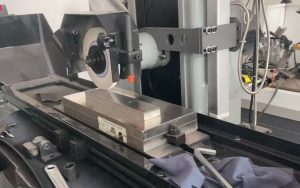
Machine-processing-equipment-Planar-grinding-machine

Introduction to the characteristics of high-precision parts processing

16
June
In specific applications, the higher the precision, the more exquisite the precision parts, which can better reflect the processing level and quality. In addition, such products are more popular among customers. In production, CNC machining centers usually have incomparable advantages and characteristics, and the product quality is generally high, so they are used to process high-precision mechanical parts.
  1. The high-precision mechanical part of the first CNC machine tool has higher working efficiency, and the mechanical part of the CNC machine tool can produce several more inclined surfaces. Compared with ordinary lathes, it can save a lot of production processes and time, and the quality of parts manufactured by CNC machining centers is also much smoother than that of ordinary lathes.
  2. The processing of high-precision mechanical parts by CNC machine tools plays an irreplaceable role in the research and development of new products. Generally, the processing of mechanical parts with different complexities can be carried out through programming. To modify and update the design, only the program of the lathe needs to be changed, which can greatly shorten the product research and development cycle.
  3. The processing automation degree of high-precision mechanical parts by CNC machine tools is relatively high, which can reduce the physical labor intensity of workers. Workers do not need to operate the whole process like ordinary lathes, but mainly observe and supervise the lathes. Moreover, the technological content of the corresponding CNC machining center is higher than that of ordinary lathes, so the demand for mental work is also higher than that of ordinary lathes.
  4. The initial investment is larger than that of ordinary lathes. Due to the high price of CNC lathes, their maintenance costs are high and the first preparation period for production is long.

Powder-coating-processing-equipment-Continuous-processing-Powder-processing-roomPowder-coating-processing-equipment-Continuous-processing-Large-scale-dust-collector-for-powder-recovery


Characteristics of precision hardware parts processing

16
June
Tandard deviations and stricter requirements for processing technology. With the development of industrialization and the constant changes in demand, precision processing is developing in multiple directions, with increasingly broad prospects, more refined directions, and increasingly obvious systematization. With the advancement of science and technology, its technology continues to improve, and the quality and precision of processing are getting higher and higher.
Characteristics of precision hardware
  1. Diversified appearances and high precision in specifications and appearances. Most of the material thicknesses are 3mm-12.5mm, which are fine blanking parts of medium and thick plates. The blanking section is vertical and smooth, and the quality is comparable to cutting.
  2. All are mass-produced to meet the medium economic production scale of electrical product parts, including fine blanking parts for medium trucks, cars, motorcycles and other products. All raw materials are stamped into finished products in one mold without cutting.
  3. Due to the hardening effect of cold working, the surface hardness and strength of the fine blanking section are greatly improved, and the wear resistance and thickness resistance are enhanced. The service life of fine blanking parts such as gear tooth profiles, shaft sleeves used as moving surfaces and friction surfaces will be increased.
  4. Fine blanking parts have clear contours and small chipping. Some hole edges and hole positions are ≤ t, with forming fine blanking such as embossing, counterbores, buried holes, and rim flanges. Especially fine blanking parts with small modules such as involute, cycloid, triangle, square, and trapezoid cannot be manufactured by other processing techniques.

Machine-processing-products-Various-non-standard-riveted-parts-2Machine-processing-products-Various-non-standard-riveted-parts

Requirements for CNC machining quality

  1. Tool selection: When processing steel and copper, the use of finishing tools should be strictly distinguished, and the finishing allowance should be large, so that the smoothness of the workpiece and the service life of the tool will be better.
  2. Before processing, check whether the tool shakes with the calibration table to allow the tolerance range. Before processing, an air gun should be used to blow the blade and the lock nozzle clean, or wipe them with a cloth before loading. Excessive dirt will have a negative impact on the precision and quality of the workpiece.
  3. When clamping, pay attention to whether the name and model of the workpiece are consistent with those in the program, whether the material specifications are matched, whether the clamping height is high enough, and the number of calipers.
  4. The program list is consistent with the reference angle direction marked on the mold.

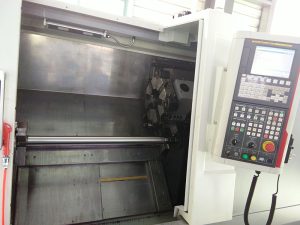
Machine-processing-equipment-Inclined-bed-CNC-lathe

Home
WhatsApp
Email
Contacts